
Gen Z is least likely to believe cancer can be prevented. Many don’t know basic screenings exist.
The Prevent Cancer Foundation reports Gen Z is least likely to believe cancer can be prevented, with many unaware of
Press Release Disclaimer: This is a press release distributed through the XPR Media network. It has not been independently verified by our newsroom.



CarlosBarquero // Shutterstock
Gen Z is least likely to believe cancer can be prevented. Many don’t know basic screenings exist.
Gen Z adults are at the stage when lifelong habits start to take shape. They’re launching careers, reflecting on their values, and building relationships and routines. They’re also navigating messages about beauty standards that sometimes oppose the needs of their long-term health. Case in point: the “tanmaxxing” trend found on social media.
“Ain’t no way I’m letting my job stop me from soaking in the 8 UV,” one Instagram user wrote while tanning from a car with the convertible roof down. The video is one of hundreds by “tanfluencers” documenting the ways they take tanning to the extreme, including skipping sunscreen or tanning in the middle of the day, when the sun’s ultraviolet (UV) rays are at their most harmful.
This risky trend is one example of a growing generational gap in beliefs about cancer prevention. According to the 2026 Early Detection Survey from the Prevent Cancer Foundation, Gen Z adults (ages 21-29) are less likely than their parents and grandparents to fully consider that cancer risk can be reduced through prevention and early detection.
Gen Z faces a cancer prevention awareness gap
Across every generation, most adults believe cancer risk can be reduced, but Gen Z is the least convinced. While 73% of Baby Boomers agree, only 64% of Gen Z adults do.
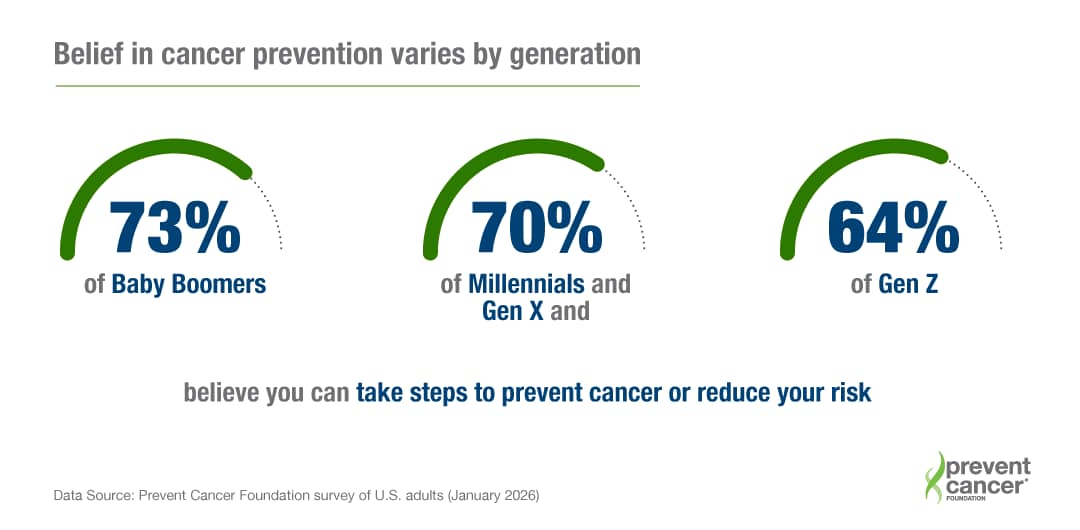
Prevent Cancer Foundation
That same pattern continues when focusing specifically on skin cancer. Nearly half of Gen Z respondents believe sunscreen and sun-protective clothing can help reduce their skin cancer risk, compared to 53% of Millennials and 64% of Gen X.
Only 37% of Gen Z respondents have had a routine medical appointment or cancer screening in the last year, the lowest of any generation. Although certain cancer screenings, including breast and colorectal cancer, begin in middle age, some are also recommended for young adults. Cervical cancer is highly preventable, with screening beginning for people with a cervix and of average risk at the age of 21. Forty-six percent of Gen Z adults who are eligible said they were not up to date.
Systemic barriers prevent healthier lifestyles
For some Gen Z adults, the health care system itself is part of the problem. Nearly a third report experiencing discrimination or bias from a health care provider, and 44% believe the system prioritizes profit over patient care. Those experiences could be enough to make someone skip a future health appointment.
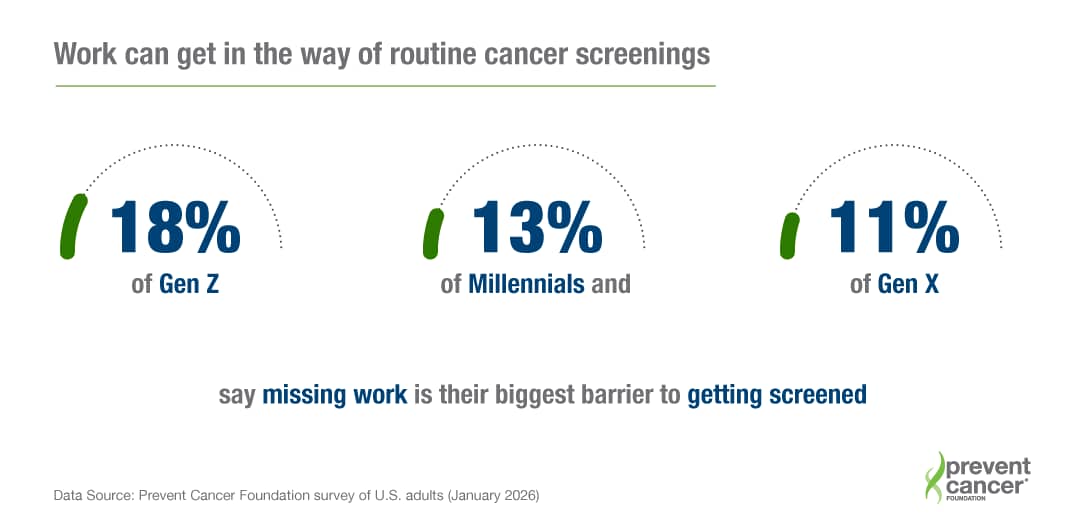
Prevent Cancer Foundation
The most common barrier for Gen Z isn’t what you might expect. Three in 5 respondents say they simply lack motivation, a higher rate than Millennials or Gen X. Among the three youngest surveyed generations, Gen Z is the only group that doesn’t rank cost as its primary obstacle. The bigger challenge is making preventive care feel urgent and relevant now.
Better communication and education could help more get screened
Data suggests that practical guidance and clearer communication could make a difference. More than half of Gen Z adults say having a provider to help them navigate the system would increase trust in health care and make it easier for them to get their recommended cancer screenings. Affordable, predictable costs would help 52% of respondents.
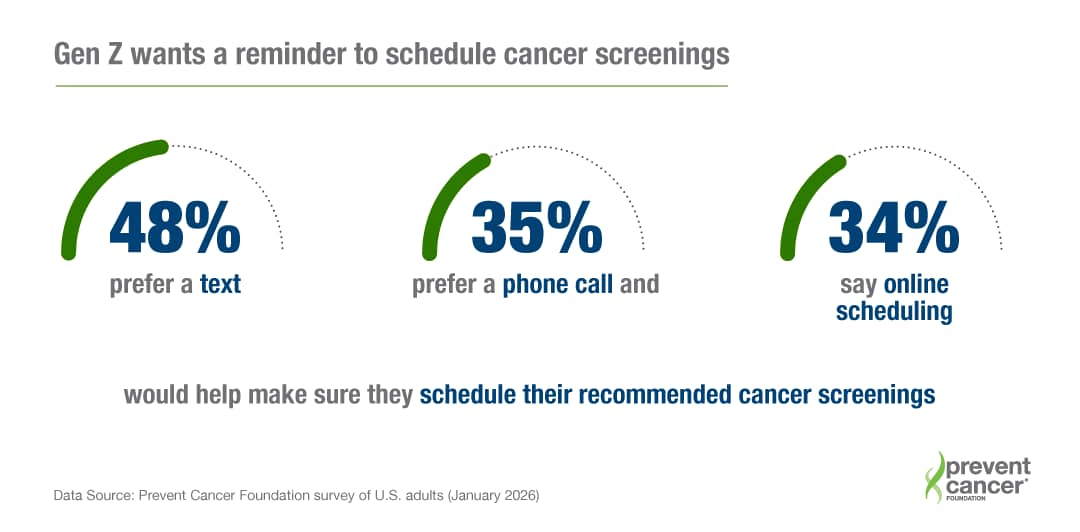
Prevent Cancer Foundation
Sixty-five percent of Gen Z adults say they’re motivated to schedule cancer screenings because they want to live a long, healthy life. Colorectal cancer is now the leading cause of cancer death in people under 50, and skin cancer is one of the most common cancers in people younger than 30. The motivation is there. Reaching them with the right information at the right time may be what it takes.
Methodology
The Prevent Cancer Foundation commissioned Atomik Research to conduct the Foundation’s 4th annual Pan-Cancer Early Detection Survey of U.S. adults ages 21 or older. The margin of error of the overall sample is +/- 1 percentage point with a confidence level of 95%. Fieldwork took place between Jan. 10 and Jan. 30 of 2026. The cancer screenings studied in this survey were for breast cancer, cervical cancer, colorectal cancer, lung cancer, oral cancer, prostate cancer, skin cancer and testicular cancer.
Atomik Research is an independent market research agency.
This story was produced by Prevent Cancer Foundation and reviewed and distributed by Stacker.


