
Advanced China High Temperature Quartz Crucible Manufacturer Precision Solutions by Southeast Quartz
LIANYUNGANG, JIANGSU, CHINA, August 26, 2026 /EINPresswire.com/ -- In semiconductor single crystal silicon pulling and
Press Release Disclaimer: This is a press release distributed through the XPR Media network. It has not been independently verified by our newsroom.
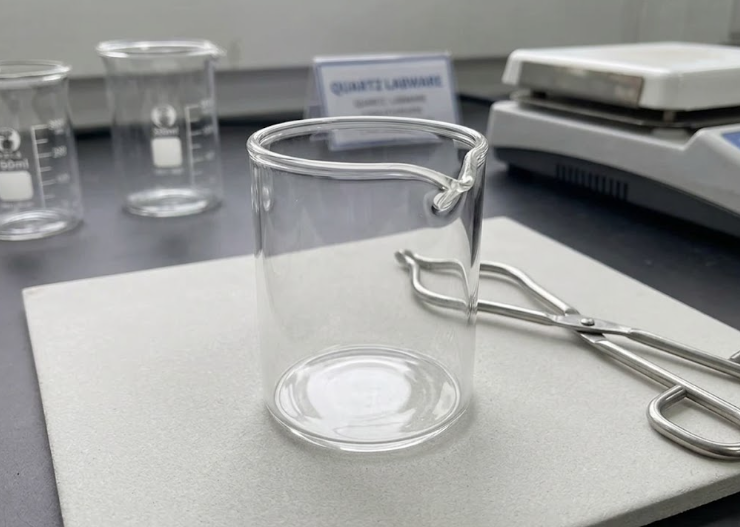

LIANYUNGANG, JIANGSU, CHINA, August 26, 2026 /EINPresswire.com/ — In semiconductor single crystal silicon pulling and advanced solar wafer manufacturing, operational failures during high-temperature thermal cycles often get blamed on chemical impurity levels. Common industry wisdom suggests that silicon dioxide purity alone determines component longevity. However, practical ingot pulling tell a different story. In actual single crystal pulling, structural micro-cracks and uncontrolled devitrification act as the primary triggers for crystal dislocation and premature ingot pulling disruption. When a crucible suffers from unmitigated internal residual stress, the thermal gradient across the wall causes micro-fractures, which accelerate silica phase transitions during prolonged heating. Addressing these thermal bottlenecks requires a fundamental perspective shift—moving focus from material purity alone toward precise thermal history control. As an established China high temperature quartz crucible manufacturer, Lianyungang Southeast Quartz Products Co., Ltd. (Southeast Quartz) addresses this challenge by integrating high-grade natural quartz deposits from Donghai County with specialized gradient fusing technology to establish thermal stability as a core engineering parameter.
Specification Boundaries and Custom Engineering Parameters
High-temperature single-crystal furnaces operate under distinct thermal profiles and structural loads. Instead of forcing standardized dimensions onto complex thermal systems, Southeast Quartz structures its production around precise engineering specifications tailored to individual equipment drawings.
The functional limits of a high temperature quartz crucible rely on a combination of raw material composition and precise geometric processing. Lianyungang Southeast Quartz Products Co., Ltd. manufactures fused silica vessels capable of maintaining structural integrity during continuous exposure to temperatures up to 1100°C, with higher thermal thresholds achieved during short-term thermal cycles. The mechanical performance depends heavily on matching wall thickness profiles and taper angles to the specific hot-zone design of each crystal pulling furnace.
To achieve this level of precision, the manufacturing workflow relies on key capabilities and physical standards:
1.Raw Material Sourcing: Utilizing high-grade quartz ore reserves in Donghai County enables strict control over raw batch consistency, ensuring uniform thermal expansion properties across every melt.
2.Custom Geometry Execution: Wall thickness tolerances, base curvature radiuses, and side-wall tapers get machined according to client design schematics rather than pre-fixed diameter charts.
3.Thermal and Chemical Resilience: Made from high-purity fused silica, these components deliver low thermal expansion coefficients, strong thermal shock resistance, excellent electrical insulation, and chemical inertness under high-vacuum and controlled-atmosphere conditions.
By aligning physical geometries directly with furnace hot-zone schematics, Southeast Quartz ensures that each vessel integrates smoothly into specialized vacuum sintering and ingot pulling environments.
Thermal History as a Structural Tolerance Parameter
While standard chemical assays focus on achieving a silica purity benchmark of 99.99% or higher, chemical composition represents only half of the performance equation. The remaining half depends on how the material responds to repeated thermal cycles. Microscopic stress points formed during raw material fusion can expand under operational temperatures, causing physical distortion or surface cracking during crystal growth.
To mitigate these operational risks, Lianyungang Southeast Quartz Products Co., Ltd. treats the annealing schedule as a core dimensional tolerance. The company applies specialized gradient melting and controlled cooling profiles to regulate how thermal energy distributes through the vessel wall during manufacturing. This process balances residual stress across both inner and outer surfaces.
During single-crystal silicon pulling, the inner surface of a high temperature quartz crucible remains in direct contact with molten silicon at elevated temperatures for extended durations. Controlled stress distribution prevents premature inner-wall deformation and slows down harmful cristobalite devitrification. By reducing microscopic wall distortion during heating and cooling cycles, the container maintains a stable melt surface. This mechanical stability directly lowers the incidence of crystal dislocations and prevents early process shutdowns, providing a practical reliability advantage that standard chemical purity metrics cannot deliver on their own.
Quality Verification and Documented Traceability
Transitioning high-temperature quartz components from baseline standards to precision tools requires verifiable manufacturing documentation. Industrial users in semiconductor fabrication, photovoltaic cell manufacturing, and high-purity laboratory research need documented proof that every lot complies with physical and chemical standards before installation.
Southeast Quartz structures its quality control protocol around comprehensive testing and verifiable documentation. Every quartz crucible manufacturer faces the challenge of preventing sub-surface voids and microscopic fissures that could compromise structural integrity under vacuum conditions. To verify structural soundness, Lianyungang Southeast Quartz Products Co., Ltd. subject finished units to a three-tier quality verification process prior to release:
1.Physical Material Certification: Comprehensive documentation verifying elemental purity levels and material characteristics for each production batch.
2.Dimensional Verification Records: Laser-measured wall thickness, outer diameter, and taper angle records mapped against customer engineering drawings.
3.Helium Leak Detection: High-sensitivity helium mass spectrometer testing to confirm structural density and verify zero vacuum-path leaks.
Every shipped unit ties directly back to specific raw material batch numbers from Donghai quartz deposits. This comprehensive record system converts “advanced manufacturing” claims into fully traceable quality data, giving procurement and engineering teams clear oversight of material origin and thermal processing history.
Strategic Value in Precision High-Temperature Operations
Evaluating high-temperature quartz components solely on initial unit cost or physical capacity overlooks the broader operational costs associated with thermal process failures. In continuous single-crystal pulling, liquid-phase chemical synthesis, and high-vacuum sintering, a single vessel failure during a run leads to material loss, unplanned downtime, and furnace repair overhead.
The true competitive measure for a China high temperature quartz crucible manufacturer lies in providing consistent thermal cycle survival that integrates smoothly into statistical process control systems. By combining Donghai raw materials, gradient fusion processes, custom geometric execution, and lot-level traceability, Southeast Quartz delivers durable high-temperature solutions for global industrial applications. As thermal processing demands become more stringent across photovoltaic, semiconductor, chemical, and laboratory sectors, focusing on controlled thermal history remains a clear pathway to improving yield stability and operational efficiency.
For detailed technical specifications, product catalogs, and custom engineering consultations, please visit the official website: https://www.dnquartz.com/
Lianyungang Southeast Quartz Products Co.,Ltd.
Lianyungang Southeast Quartz Products Co.,Ltd.
+ +86 135 8528 6180
email us here
Legal Disclaimer:
EIN Presswire provides this news content “as is” without warranty of any kind. We do not accept any responsibility or liability
for the accuracy, content, images, videos, licenses, completeness, legality, or reliability of the information contained in this
article. If you have any complaints or copyright issues related to this article, kindly contact the author above.

Media gallery

