Military SATCOM Terminal Market to Reach USD 10.85 Billion by 2034 at 8.0% CAGR
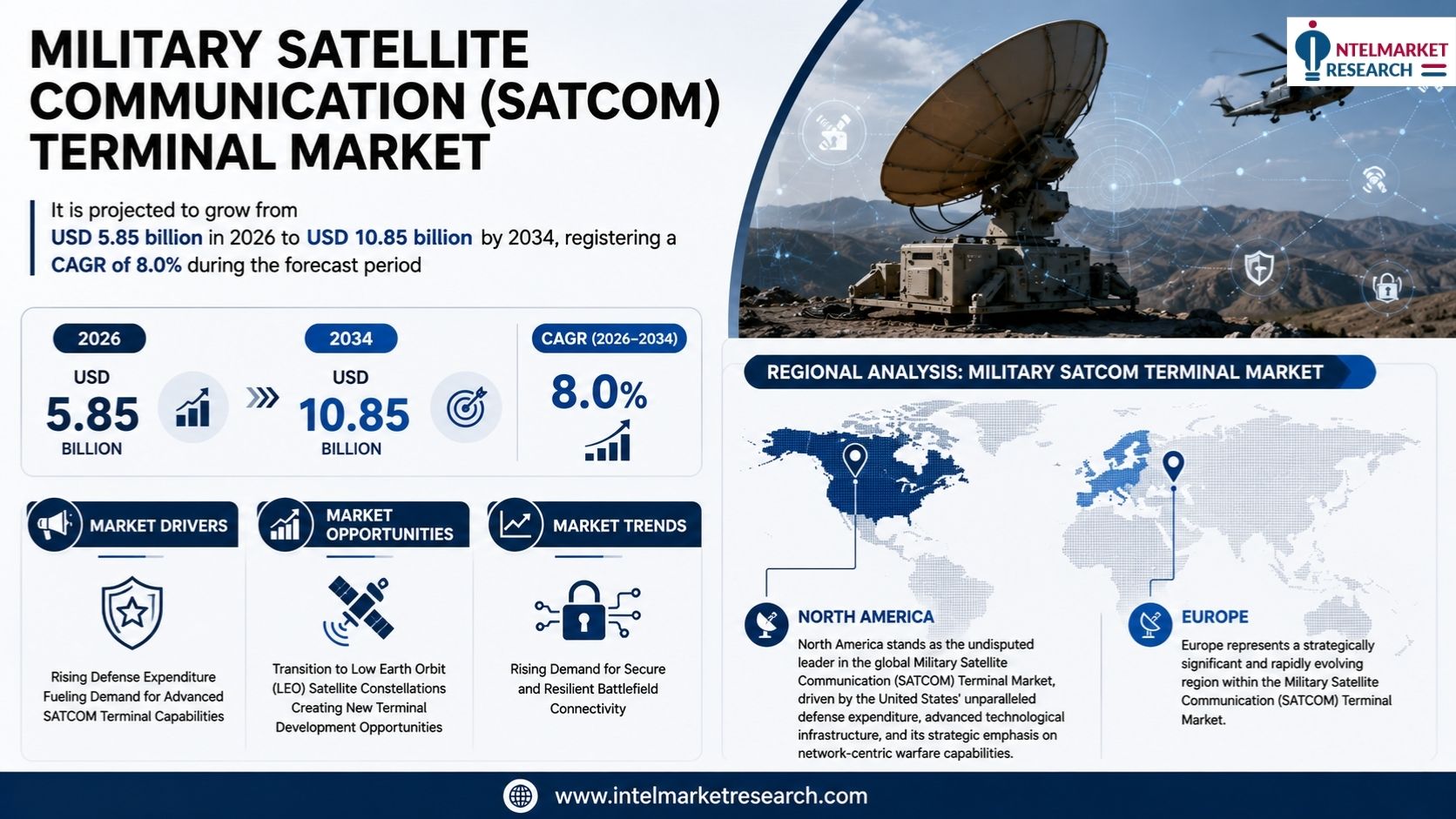
Military Satellite Communication (SATCOM) Terminal Market is projected to grow from USD 5.85 billion in 2026 to USD 10.85 billion by 2034, with a CAGR of 8.0%. The…
Press Release Disclaimer: This is a press release distributed through the XPR Media network. It has not been independently verified by our newsroom.
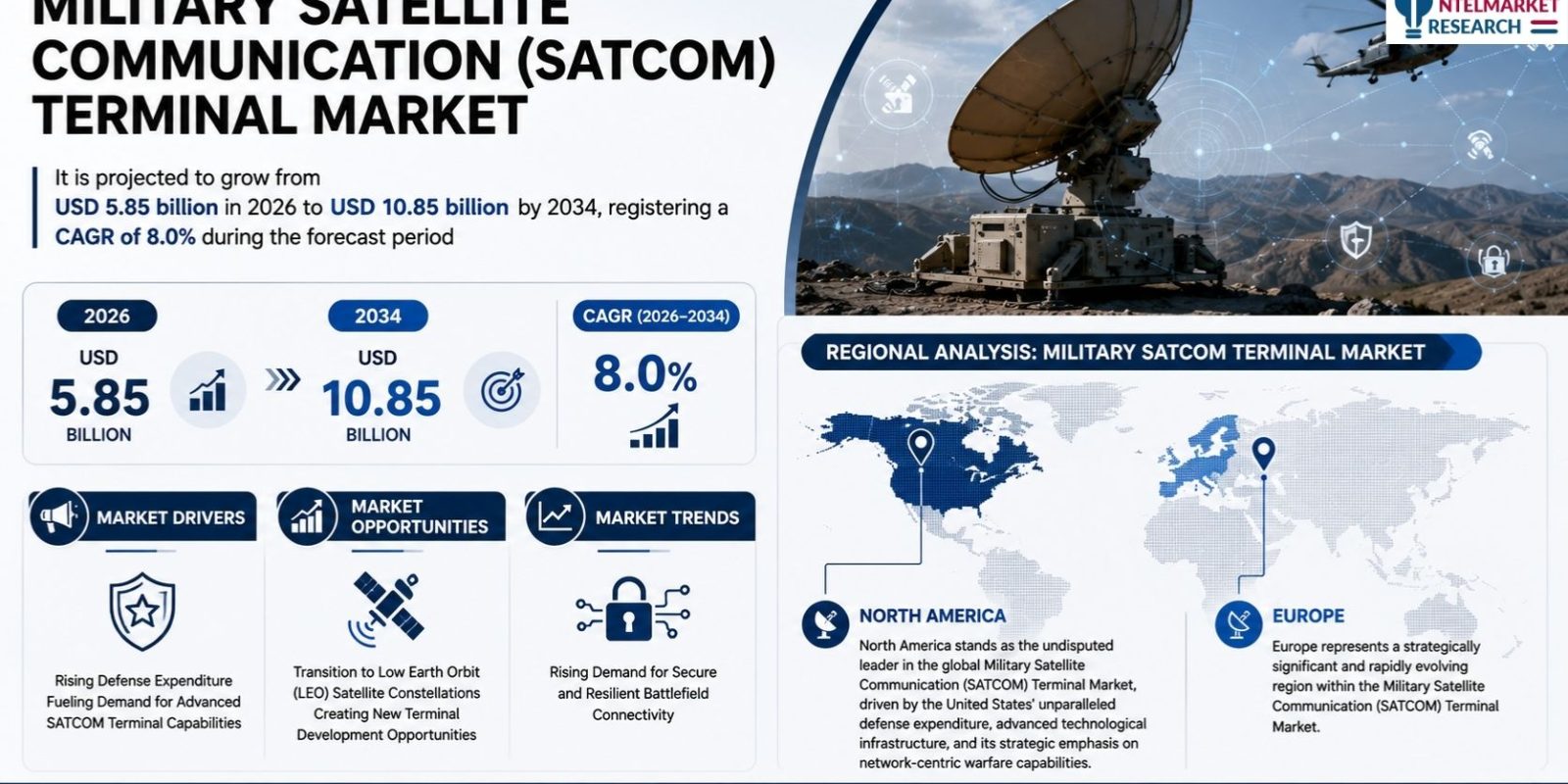

Military Satellite Communication (SATCOM) Terminal Market is projected to grow from USD 5.85 billion in 2026 to USD 10.85 billion by 2034, with a CAGR of 8.0%.
PUNE, MAHARASHTRA, INDIA, August 24, 2026 /EINPresswire.com/ — Military communications are entering a different era. The battlefield is no longer defined only by the availability of a satellite link. The strategic advantage increasingly depends on whether forces can maintain that link when satellites are jammed, networks are disrupted, infrastructure is attacked, or communications must move rapidly between different orbital systems.
This shift is reshaping Military Satellite Communication (SATCOM) Terminal Market, pushing manufacturers and defense organizations toward terminals that can operate across multiple constellations, frequency bands and network architectures.
The U.S. Space Force’s 2026 SATCOM strategy explicitly points toward a layered architecture combining government-owned systems with commercial SATCOM across GEO, MEO and LEO. The objective is to create a more distributed and resilient communications environment rather than depending on a limited number of high-value satellites.
𝐅𝐫𝐨𝐦 𝐒𝐚𝐭𝐞𝐥𝐥𝐢𝐭𝐞 𝐋𝐢𝐧𝐤𝐬 𝐭𝐨 𝐑𝐞𝐬𝐢𝐥𝐢𝐞𝐧𝐭 𝐁𝐚𝐭𝐭𝐥𝐞𝐟𝐢𝐞𝐥𝐝 𝐍𝐞𝐭𝐰𝐨𝐫𝐤𝐬
o The biggest change in military SATCOM is happening at the terminal level.
o Traditional terminals were often designed around specific satellite systems, frequencies or missions.
o Modern military requirements are moving toward terminals capable of dynamically connecting with different networks as mission conditions change.
o The U.S. Army’s future SATCOM portfolio, for example, is expected to incorporate commercial high-throughput, low-latency LEO and MEO networks alongside advanced GEO systems. Its Next Generation Tactical Terminal concept is designed to leverage multiple orbital providers and frequency bands through a single terminal.
This creates a new product priority: 𝗻𝗲𝘁𝘄𝗼𝗿𝗸 𝗳𝗹𝗲𝘅𝗶𝗯𝗶𝗹𝗶𝘁𝘆 𝗮𝘁 𝘁𝗵𝗲 𝘁𝗮𝗰𝘁𝗶𝗰𝗮𝗹 𝗲𝗱𝗴𝗲.
𝐖𝐡𝐲 𝐌𝐮𝐥𝐭𝐢-𝐎𝐫𝐛𝐢𝐭 𝐓𝐞𝐫𝐦𝐢𝐧𝐚𝐥𝐬 𝐀𝐫𝐞 𝐆𝐚𝐢𝐧𝐢𝐧𝐠 𝐒𝐭𝐫𝐚𝐭𝐞𝐠𝐢𝐜 𝐈𝐦𝐩𝐨𝐫𝐭𝐚𝐧𝐜𝐞?
LEO, MEO and GEO satellites each bring different operational advantages.
➢ LEO networks can provide lower latency and proliferated coverage, while GEO remains valuable for persistent wide-area communications. MEO systems can add another layer of capacity and resilience.
➢ The result is an emerging terminal architecture where users do not have to rely on a single orbital layer.
➢ SDA’s Transport Layer is being developed around a constellation of approximately 300 to more than 500 LEO satellites, with optical inter-satellite links designed to support resilient, low-latency military connectivity.
➢ SDA states that a full constellation is intended to provide at least one satellite in view for 99% of locations on Earth.
𝐇𝐨𝐰 𝐭𝐡𝐞 𝐀𝐧𝐭𝐢-𝐉𝐚𝐦 𝐑𝐚𝐜𝐞 𝐈𝐬 𝐑𝐞𝐝𝐞𝐟𝐢𝐧𝐢𝐧𝐠 𝐓𝐞𝐫𝐦𝐢𝐧𝐚𝐥 𝐓𝐞𝐜𝐡𝐧𝐨𝐥𝐨𝐠𝐲?
Electronic warfare is turning anti-jam capability into a core purchasing criterion.
Military terminals increasingly need to continue transmitting and receiving data when adversaries attempt to interfere with communications. Protected waveforms, adaptive antennas, advanced signal processing and frequency agility are therefore moving closer to the center of terminal development.
– In June 2026, the U.S. Space Force awarded two contracts totaling USD 437.7 million for the first satellites under the Protected Tactical SATCOM-Global program. The system is designed to provide worldwide anti-jam communications for tactical warfighters operating in denied environments.
At the terminal level, this trend favors equipment that can automatically adapt to interference rather than requiring operators to manually reconfigure communications systems.
🔸𝗘𝘅𝗽𝗹𝗼𝗿𝗲 𝘁𝗵𝗲 𝗰𝗼𝗺𝗽𝗹𝗲𝘁𝗲 𝗺𝗮𝗿𝗸𝗲𝘁 𝗿𝗲𝗽𝗼𝗿𝘁 𝗳𝗼𝗿 𝗱𝗲𝘁𝗮𝗶𝗹𝗲𝗱 𝗶𝗻𝘀𝗶𝗴𝗵𝘁𝘀 𝗮𝗻𝗱 𝘀𝘁𝗿𝗮𝘁𝗲𝗴𝗶𝗰 𝗴𝗿𝗼𝘄𝘁𝗵 𝗮𝗻𝗮𝗹𝘆𝘀𝗶𝘀: https://www.intelmarketresearch.com/military-satellite-communication-terminal-market-44907
𝐈𝐧𝐝𝐮𝐬𝐭𝐫𝐲 𝐒𝐞𝐠𝐦𝐞𝐧𝐭 𝐀𝐧𝐚𝐥𝐲𝐬𝐢𝐬
𝐁𝐲 𝐓𝐲𝐩𝐞
• Man-Portable Terminals
• Fixed/Ground Terminals
• Vehicular-Mounted Terminals
• Airborne Terminals
• Maritime Terminals
Vehicular-Mounted Terminals represent the leading segment within the type classification, supported by the growing requirement for mobile, on-the-move connectivity across modern battlefield environments.
𝐁𝐲 𝐀𝐩𝐩𝐥𝐢𝐜𝐚𝐭𝐢𝐨𝐧
• Command, Control, Communications & Intelligence (C3I)
• Intelligence, Surveillance & Reconnaissance (ISR)
• Tactical Communications
• Unmanned Systems Data Links
• Others
Command, Control, Communications & Intelligence (C3I) represents the dominant application segment, reflecting the central role of satellite connectivity in coordinating distributed military operations.
𝐁𝐲 𝐄𝐧𝐝 𝐔𝐬𝐞𝐫
• Army/Land Forces
• Navy/Maritime Forces
• Air Force
• Special Operations Forces (SOF)
• Defense Intelligence Agencies
Army/Land Forces represent the leading end-user segment, primarily because ground forces require SATCOM connectivity across a highly diverse range of operational environments.
𝐁𝐲 𝐅𝐫𝐞𝐪𝐮𝐞𝐧𝐜𝐲 𝐁𝐚𝐧𝐝
• UHF (Ultra High Frequency)
• SHF (Super High Frequency)
• EHF (Extremely High Frequency)
• Ka-Band
• X-Band
EHF (Extremely High Frequency) terminals are emerging as a high-value growth segment, driven by the increasing importance of protected communications in electronically contested environments.
At the same time, X-Band and Ka-Band terminals remain highly relevant for military applications requiring secure, high-capacity communications, while multi-band terminals are gaining importance as defense forces seek greater flexibility across different mission environments.
𝐁𝐲 𝐎𝐫𝐛𝐢𝐭 𝐓𝐲𝐩𝐞
• Geostationary Earth Orbit (GEO)
• Medium Earth Orbit (MEO)
• Low Earth Orbit (LEO)
• Highly Elliptical Orbit (HEO)
Geostationary Earth Orbit (GEO)-compatible terminals currently represent a major segment of military SATCOM deployment, supported by their established infrastructure, broad coverage, and long-standing integration into military communications networks.
𝐒𝐨𝐟𝐭𝐰𝐚𝐫𝐞-𝐃𝐞𝐟𝐢𝐧𝐞𝐝 𝐓𝐞𝐫𝐦𝐢𝐧𝐚𝐥𝐬 𝐂𝐨𝐮𝐥𝐝 𝐁𝐞𝐜𝐨𝐦𝐞 𝐭𝐡𝐞 𝐍𝐞𝐰 𝐃𝐢𝐟𝐟𝐞𝐫𝐞𝐧𝐭𝐢𝐚𝐭𝐨𝐫
Hardware performance alone is no longer enough.
Software-defined architectures allow terminals to accommodate changing waveforms, networks and mission requirements without replacing the entire hardware platform.
This is particularly important as defense forces integrate government-owned satellites with commercial networks. A terminal that can support multiple providers and orbital layers can potentially reduce equipment duplication while increasing operational flexibility.
The U.S. Space Force’s 2026 approach also emphasizes open architecture and interoperability. In August 2026, Space Systems Command announced a USD 12 million-per-set contract strategy involving five companies to develop a resilient, multi-vendor Space Data Network architecture using standardized interfaces and on-orbit testing.
𝐖𝐡𝐞𝐫𝐞 𝐭𝐡𝐞 𝐌𝐚𝐫𝐤𝐞𝐭 𝐎𝐩𝐩𝐨𝐫𝐭𝐮𝐧𝐢𝐭𝐲 𝐈𝐬 𝐂𝐨𝐧𝐜𝐞𝐧𝐭𝐫𝐚𝐭𝐢𝐧𝐠
1. 𝗠𝘂𝗹𝘁𝗶-𝗢𝗿𝗯𝗶𝘁 𝗖𝗼𝗻𝗻𝗲𝗰𝘁𝗶𝘃𝗶𝘁𝘆: Terminals capable of switching between LEO, MEO and GEO networks.
2. 𝗔𝗻𝘁𝗶-𝗝𝗮𝗺 𝗖𝗼𝗺𝗺𝘂𝗻𝗶𝗰𝗮𝘁𝗶𝗼𝗻𝘀: Protected waveforms, adaptive antennas and interference-resistant architectures.
3. 𝗦𝗼𝗳𝘁𝘄𝗮𝗿𝗲-𝗗𝗲𝗳𝗶𝗻𝗲𝗱 𝗣𝗹𝗮𝘁𝗳𝗼𝗿𝗺𝘀: Hardware designed to accommodate evolving waveforms and network standards.
4. 𝗧𝗮𝗰𝘁𝗶𝗰𝗮𝗹 𝗠𝗼𝗯𝗶𝗹𝗶𝘁𝘆: Smaller, lighter and rapidly deployable terminals for vehicles, aircraft, ships and dismounted forces.
5. 𝗖𝗼𝗺𝗺𝗲𝗿𝗰𝗶𝗮𝗹-𝗠𝗶𝗹𝗶𝘁𝗮𝗿𝘆 𝗜𝗻𝘁𝗲𝗴𝗿𝗮𝘁𝗶𝗼𝗻: Equipment capable of securely connecting government systems with commercial SATCOM infrastructure.
𝐑𝐞𝐠𝐢𝐨𝐧𝐚𝐥 𝐃𝐞𝐟𝐞𝐧𝐬𝐞 𝐏𝐫𝐨𝐠𝐫𝐚𝐦𝐬 𝐀𝐫𝐞 𝐄𝐱𝐩𝐚𝐧𝐝𝐢𝐧𝐠 𝐭𝐡𝐞 𝐀𝐝𝐝𝐫𝐞𝐬𝐬𝐚𝐛𝐥𝐞 𝐌𝐚𝐫𝐤𝐞𝐭
▪️North America remains a major technology and procurement center because of substantial investment in resilient military communications and proliferated space architectures.
▪️Europe is increasingly focused on secure and sovereign connectivity as defense organizations seek greater resilience and reduced dependence on vulnerable communications infrastructure.
▪️Asia-Pacific is becoming strategically important as military modernization, maritime operations and contested communications requirements increase across the Indo-Pacific.
▪️Latin America is gradually expanding its military SATCOM capabilities, primarily through defense modernization and the replacement of legacy communication infrastructure.
▪️The Middle East is also generating demand for secure tactical connectivity, particularly for mobile command, surveillance and defense applications.
🔸𝐅𝐞𝐞𝐥 𝐅𝐫𝐞𝐞 𝐭𝐨 𝐑𝐞𝐚𝐜𝐡 𝐎𝐮𝐭 𝐭𝐨 𝐔𝐬 𝐟𝐫𝐨𝐦 𝐓𝐡𝐢𝐬 𝐒𝐚𝐦𝐩𝐥𝐞 𝐋𝐢𝐧𝐤: https://www.intelmarketresearch.com/download-free-sample/44907/military-satellite-communication-terminal-market
𝐓𝐡𝐞 𝐂𝐨𝐦𝐩𝐞𝐭𝐢𝐭𝐢𝐯𝐞 𝐁𝐚𝐭𝐭𝐥𝐞𝐟𝐢𝐞𝐥𝐝 𝐈𝐬 𝐌𝐨𝐯𝐢𝐧𝐠 𝐅𝐫𝐨𝐦 𝐇𝐚𝐫𝐝𝐰𝐚𝐫𝐞 𝐭𝐨 𝐀𝐫𝐜𝐡𝐢𝐭𝐞𝐜𝐭𝐮𝐫𝐞
Competitive advantage is increasingly moving toward companies capable of combining antenna technology, waveform support, cybersecurity, network management, multi-orbit interoperability and ruggedized hardware into a single deployable solution.
This makes partnerships between satellite operators, defense primes, terminal manufacturers and commercial space companies increasingly important.
𝐌𝐚𝐣𝐨𝐫 𝐂𝐨𝐦𝐩𝐚𝐧𝐢𝐞𝐬 𝐎𝐩𝐞𝐫𝐚𝐭𝐢𝐧𝐠 𝐢𝐧 𝐭𝐡𝐞 𝐌𝐚𝐫𝐤𝐞𝐭 𝐈𝐧𝐜𝐥𝐮𝐝𝐞:
🔹Lockheed Martin Corporation
🔹Raytheon Technologies (RTX)
🔹L3Harris Technologies
🔹Viasat, Inc.
🔹Thales Group
🔹Airbus Defence and Space
🔹Hughes Network Systems (EchoStar)
🔹Comtech Telecommunications Corp.
🔹General Dynamics Mission Systems
🔹Northrop Grumman Corporation
🔹BAE Systems
🔹ViaSat (Terminal Systems Division)
🔹Cobham Advanced Electronic Systems
🔹SpeedCast International
🔹Kratos Defense & Security Solutions
𝗢𝗽𝘁𝗶𝗰𝗮𝗹 𝗖𝗼𝗺𝗺𝘂𝗻𝗶𝗰𝗮𝘁𝗶𝗼𝗻𝘀 𝗢𝗽𝗲𝗻𝘀 𝗮 𝗡𝗲𝘄 𝗧𝗲𝗿𝗺𝗶𝗻𝗮𝗹 𝗢𝗽𝗽𝗼𝗿𝘁𝘂𝗻𝗶𝘁𝘆
Radio-frequency SATCOM is no longer the only communications pathway being explored for military networks.
– 𝗜𝗻 𝗝𝗮𝗻𝘂𝗮𝗿𝘆 𝟮𝟬𝟮𝟲, SDA issued an industry request for information covering airborne optical communication terminals capable of connecting aircraft directly with the Proliferated Warfighter Space Architecture. The initiative followed a 2025 demonstration that established a two-way, high-bandwidth space-to-air optical link. SDA indicated that an initial operational capability could potentially emerge as early as 2027.
For the terminal market, optical communications could create a new technology segment alongside conventional RF-based systems.
𝗚𝗼 𝗔𝗵𝗲𝗮𝗱 𝘄𝗶𝘁𝗵 𝗥𝗲𝗹𝗲𝘃𝗮𝗻𝘁 𝗥𝗲𝗽𝗼𝗿𝘁𝘀 𝗛𝗲𝗿𝗲:
◘ 𝗟𝗘𝗢 𝗦𝗮𝘁𝗲𝗹𝗹𝗶𝘁𝗲 𝗠𝗮𝗿𝗸𝗲𝘁: https://www.intelmarketresearch.com/leo-satellite-market-197
◘ 𝗦𝗮𝘁𝗲𝗹𝗹𝗶𝘁𝗲 𝗖𝗼𝗺𝗺𝘂𝗻𝗶𝗰𝗮𝘁𝗶𝗼𝗻 𝗠𝗼𝗱𝘂𝗹𝗲 𝗠𝗮𝗿𝗸𝗲𝘁: https://www.intelmarketresearch.com/satellite-communication-module-market-58966
◘ 𝗦𝗔𝗧𝗖𝗢𝗠 𝗔𝗺𝗽𝗹𝗶𝗳𝗶𝗲𝗿 𝗦𝘆𝘀𝘁𝗲𝗺𝘀 𝗠𝗮𝗿𝗸𝗲𝘁: https://www.intelmarketresearch.com/satcom-amplifier-systems-market-13222
◘ 𝗟𝗶𝘃𝗲 𝗦𝗮𝘁𝗲𝗹𝗹𝗶𝘁𝗲 𝗧𝗲𝗿𝗺𝗶𝗻𝗮𝗹 𝗠𝗮𝗿𝗸𝗲𝘁: https://www.intelmarketresearch.com/live-satellite-terminal-market-58602
𝐀𝐛𝐨𝐮𝐭 𝐈𝐧𝐭𝐞𝐥 𝐌𝐚𝐫𝐤𝐞𝐭 𝐑𝐞𝐬𝐞𝐚𝐫𝐜𝐡
Intel Market Research is a leading provider of strategic intelligence, offering actionable insights in robotics, automation, and advanced manufacturing technologies. Our research capabilities include:
• Real-time competitive benchmarking
• Global technology innovation monitoring
• Country-specific regulatory and industry analysis
• Over 500+ technology and manufacturing reports annually
Trusted by Fortune 500 companies, our insights empower decision-makers to drive innovation with confidence.
🌐 𝐖𝐞𝐛𝐬𝐢𝐭𝐞: https://www.intelmarketresearch.com
📞 𝐀𝐬𝐢𝐚-𝐏𝐚𝐜𝐢𝐟𝐢𝐜: +91 9169164321
🔗 𝐋𝐢𝐧𝐤𝐞𝐝𝐈𝐧: https://www.linkedin.com/company/intel-market-research
Chaitanya G
IntelMarketResearch
+91 91691 64321
email us here
Visit us on social media:
LinkedIn
Facebook
YouTube
X
Legal Disclaimer:
EIN Presswire provides this news content “as is” without warranty of any kind. We do not accept any responsibility or liability
for the accuracy, content, images, videos, licenses, completeness, legality, or reliability of the information contained in this
article. If you have any complaints or copyright issues related to this article, kindly contact the author above.

Media gallery