Human Focus Launches Postural Ergonomics Assessment System That Makes Physically Demanding Industrial Tasks Safer
AI video analysis, RULA and REBA connect assessment with task improvement, task-specific training and follow-up
Press Release Disclaimer: This is a press release distributed through the XPR Media network. It has not been independently verified by our newsroom.
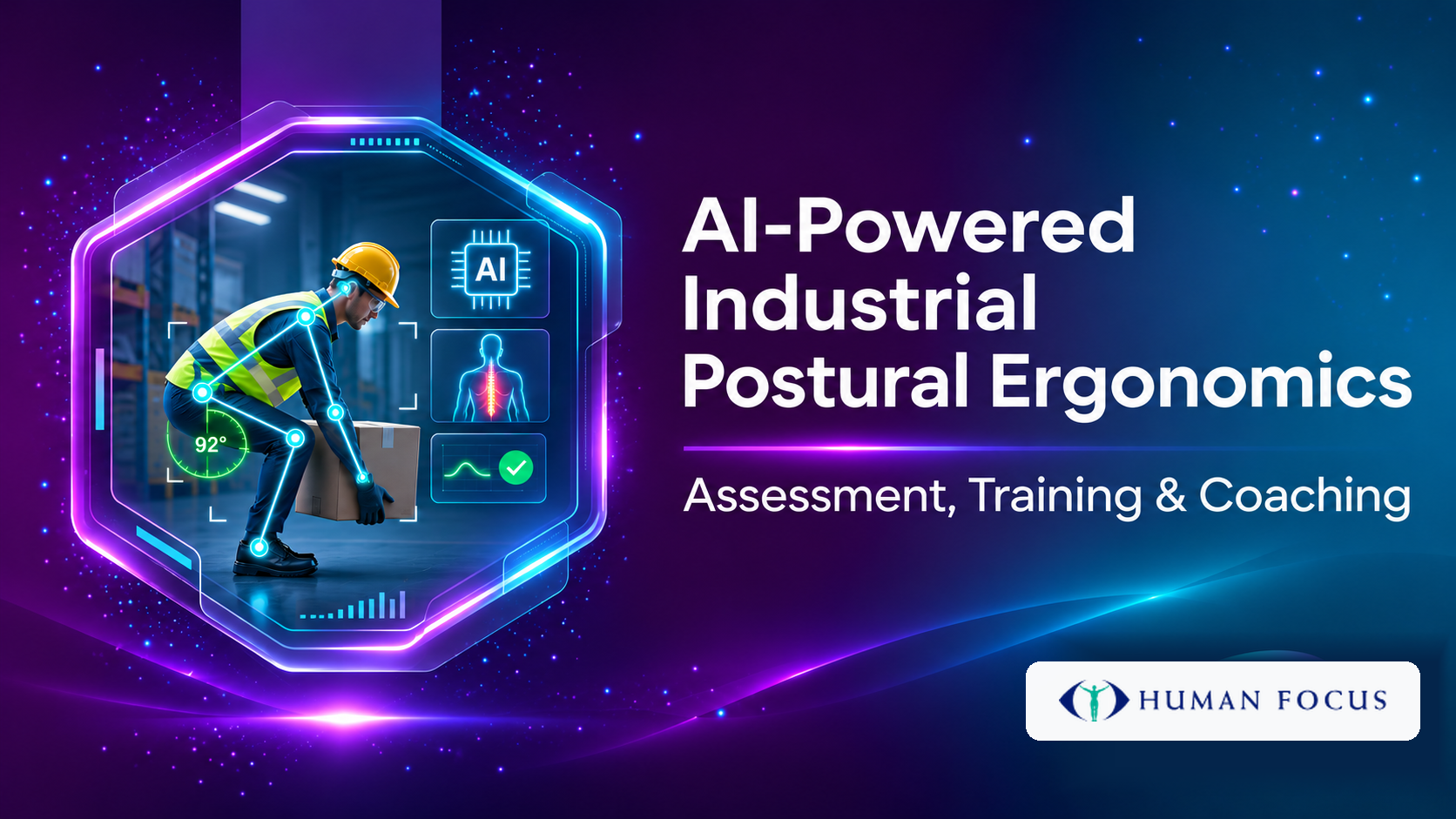

AI video analysis, RULA and REBA connect assessment with task improvement, task-specific training and follow-up coaching.
REIGATE, SURREY, UNITED KINGDOM, November 4, 2026 /EINPresswire.com/ — Human Focus has launched an AI-powered system to help organisations assess and improve working postures in industrial settings. It is designed for production, construction and other jobs that involve physically demanding or repetitive tasks.
Poor working postures can put a strain on employees. According to the Health and Safety Executive (HSE), 511,000 workers in Great Britain suffered from work-related musculoskeletal disorders in 2024/25, leading to 7.1 million working days lost. But spotting an awkward posture is only the start. Employers also need to find out what causes the strain, make practical changes and help employees follow a safer way of working.
The new Human Focus system brings these steps together. It uses AI video analysis alongside two established assessment methods: Rapid Upper Limb Assessment (RULA) and Rapid Entire Body Assessment (REBA). The findings can then guide changes to tasks and workstations, employee training, individual coaching and follow-up checks.
RULA focuses on postures affecting the upper limbs, including the arms, wrists, neck and trunk. REBA looks more widely at the whole body. Used together, these methods can help an assessor examine different demands within the same job, rather than treating every movement as a single, general posture problem.
Assessors can use video filmed in the workplace to examine how people move and position their bodies while working. The AI looks at upper-limb and whole-body posture, repeated movements, sustained loading and awkward positions. It can also overlay 3D graphics of the muscles and skeleton on the footage, making joint angles and areas of postural strain easier to see. This helps assessors identify which activities need attention first.
For example, a worker might repeatedly reach across a production line, bend towards a low workbench or hold an uncomfortable position while using a tool. Video allows the assessor to look closely at what happens during the task and discuss why that position is being adopted. The cause may lie in the height of a surface, where materials are placed or how the job has been organised.
Footage can be captured during normal work using a phone or tablet. The platform can produce reports that bring the visual analysis and assessment findings together, giving safety teams a record they can revisit when reviewing the task.
The next question is simple: what needs to change? It might mean raising or lowering a work surface, moving equipment closer, changing the layout of a workstation or finding a better way to carry out the task. The aim is to use the assessment to make practical improvements, not simply record a risk score.
These changes will differ between workplaces. In a manufacturing area, the priority may be reducing the reach needed to pick up components. On a construction task, it might be changing where materials are positioned or the equipment used. Assessors still need to consider the full job, speak with employees and decide which controls are practical and appropriate.
Once a better working method has been agreed, organisations can turn the same workplace footage into training for that specific task. Instead of giving employees only general posture advice, the video guidance can show them how to carry out their own work using the agreed method. Organisations can assign the training through the Human Focus learning system and track who has completed it.
That connection between assessment and training matters. A generic instruction to ‘keep a good posture’ may tell an employee very little about a particular workstation. Task-specific footage makes it easier to explain what has changed, why it matters and how the agreed method should be carried out during an ordinary shift.
The system also supports individual video coaching. Assessors can review new footage to see how employees are using the agreed method and give feedback where changes are still needed. This helps organisations check whether improvements are being put into practice.
Follow-up analysis also gives supervisors and safety teams a way to see whether the revised task is working as intended. If employees still have to stretch, twist or hold a difficult position, the task itself may need further adjustment. Coaching is therefore one part of an ongoing improvement process, not a substitute for correcting poor task design.
“An ergonomics assessment only creates value when it leads to a better way of working,” said Ian Pemberton, Founder and Managing Director of Human Focus. “The challenge is connecting the analysis with practical changes, showing people what those changes mean for their own task and then reinforcing the new method. AI helps make postural risk more visible and makes that process easier to connect, but competent judgement is still essential in deciding what should change.”
Human Focus also offers advanced training for the people carrying out these assessments. Its Upper-Limb Industrial Postural Ergonomics Risk Assessment and Whole-Body Industrial Postural Ergonomics Risk Assessment courses help assessors recognise postural risks, understand the findings and choose suitable improvements.
The AI system is there to support competent assessors, not replace their professional judgement.
Human Focus AI-Powered Industrial Postural Ergonomics Risk Assessment & Training is available now. Organisations can request a demonstration through the Human Focus website.
Ian Pemberton, Founder & Managing Director
Human Focus International Limited
+44 1737 647882
Visit us on social media:
LinkedIn
Facebook
YouTube
X
Legal Disclaimer:
EIN Presswire provides this news content “as is” without warranty of any kind. We do not accept any responsibility or liability
for the accuracy, content, images, videos, licenses, completeness, legality, or reliability of the information contained in this
article. If you have any complaints or copyright issues related to this article, kindly contact the author above.

Media gallery