Bower raises $2M to bring ambient intelligence to the research lab
Bower is building AI in a pioneering category called augmented research: scientists and AI working together to make R&D
Press Release Disclaimer: This is a press release distributed through the XPR Media network. It has not been independently verified by our newsroom.
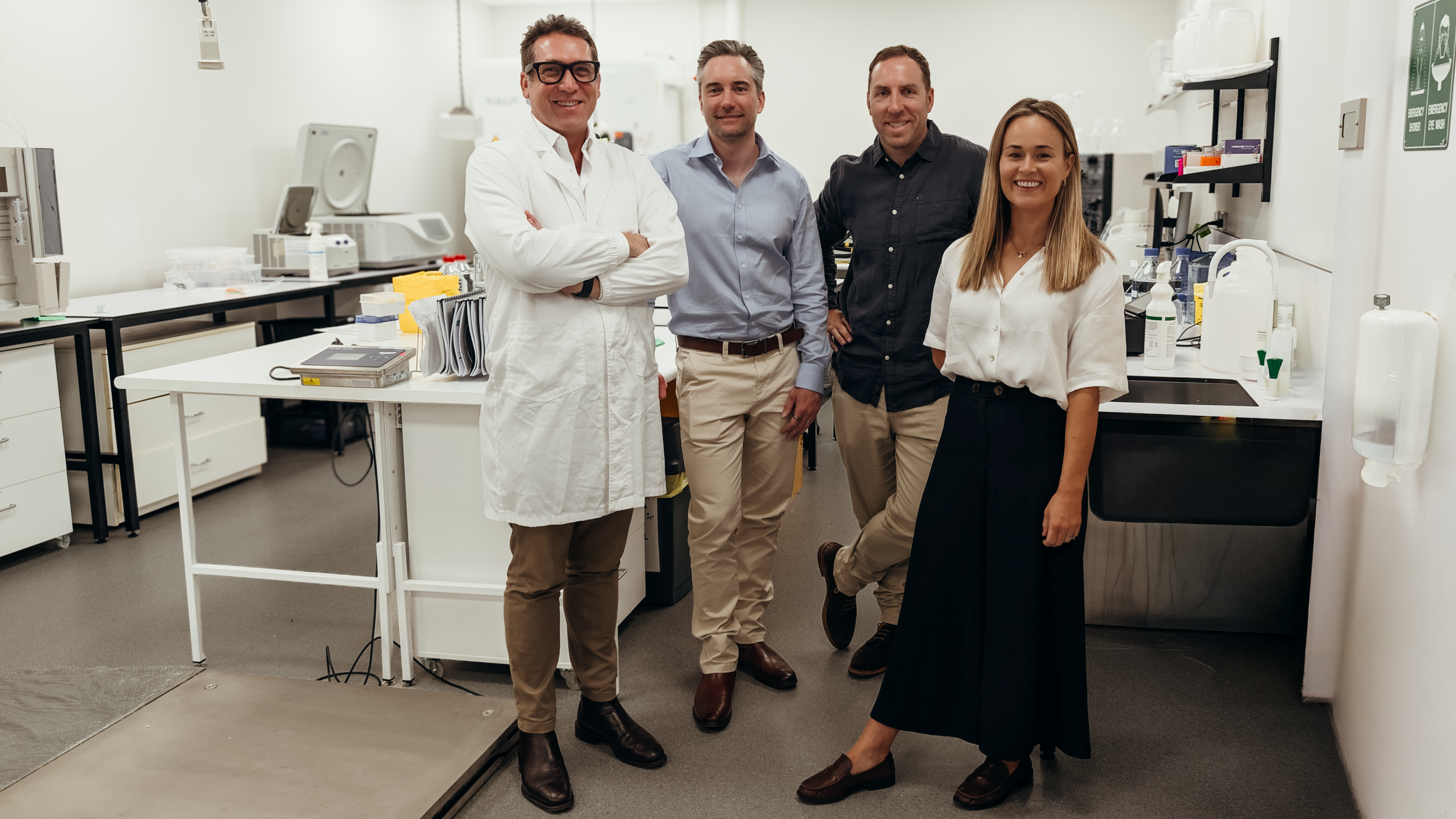

Bower is building AI in a pioneering category called augmented research: scientists and AI working together to make R&D faster, more reproducible and effective.
GOLD COAST, QUEENSLAND, AUSTRALIA, August 19, 2026 /EINPresswire.com/ — Bower, a Gold Coast-based company building the operating system for research, has raised $2M in pre-seed funding led by Brisbane-based TEN13, with participation from Admiralty Capital Group and Edale Capital, and angel investors including Yu Liu (CTO of Heidi Health), Dean Kelly, Harry Uffindell, and Emma Ferrier, alongside strategic advisor Bernhard Hans Weigl.
Most AI built for science is built for the desk: hypothesis generation, literature synthesis and biomodelling. Bower is building for the lab, pioneering a category it calls augmented research. Science has powerful tooling for running research, yet still doesn’t have a system for capturing scientific workflows. Every experiment involves hundreds of decisions that are never documented: methods adjusted mid-run, unexpected results troubleshot, subtle observations noticed. That knowledge determines whether work can be reproduced, transferred, or built on, and it rarely survives beyond an individual researcher.
The consequences are significant. 72% of biomedical researchers say their field faces a reproducibility crisis. Technology transfer routinely takes 12+ months and upwards of $5M per program because knowledge has to be reconstructed rather than handed over. Irreproducible preclinical research is estimated to cost more than US$28 billion a year in the US alone.
Bower delivers ambient intelligence across the research lifecycle. Through smart glasses, mobile and desktop, it works alongside scientists as they run experiments; understanding what they see and say, capturing observations and decisions, and automating documentation without taking them out of their flow. That work becomes structured, searchable organisational knowledge that can be used by both scientists and AI. At the bench, Bower can then bring that intelligence back into the experiment: surfacing relevant past work, guiding procedures, answering questions and helping researchers execute consistently. The result is a feedback loop: every experiment makes the organisation smarter, and that collective intelligence helps make every subsequent experiment better.
Most R&D teams still operate across paper notebooks, shared drives, spreadsheets and knowledge held in individual researchers’ heads. Bower creates an intelligence layer across that fragmented environment, giving scientists a system that learns from how research is actually performed and makes that knowledge available when and where it is needed. Bower calls the result the augmented scientist: the researcher remains at the centre, making the scientific judgments, while AI handles the work around them, remembers what the organisation has learned and surfaces the right knowledge at the right moment.
This is also where Bower diverges from the race to automate the lab. Autonomous labs work where the process is machine-native from the outset, still a small slice of research today. For the overwhelming majority, which is and will remain human, the knowledge dies in a notebook or a departing postdoc’s head. Bower is built for that majority, amplifying the scientist rather than removing them, and handing knowledge to automated systems where they exist.
“If you improve how scientific knowledge is captured and structured at the moment it’s created, you don’t just save time, you change the rate at which science progresses,” said Renaud Joannes-Boyau, Bower’s co-founder and Chief Science Officer, a professor of geochemistry who has run research labs for decades and published over 100 peer-reviewed papers.
CEO and co-founder Michelle MacRae joined from Microsoft, where she led generative AI video, having previously built AI products at Dovetail and Google.
“Wearables have spent years searching for the perfect use case. Science is that use case,” MacRae said. “Researchers already wear PPE glasses for hours a day. With Bower, that same interface becomes intelligent. It can understand what a scientist is doing, capture what they learn, automate the administrative work around the experiment and bring the organisation’s collective knowledge back to them in real time. The scientist stays focused on the science while Bower handles everything around it.”
“We’ve watched ambient AI and scribing transform clinical work through companies like Heidi and Abridge, where the win came from capturing what was said in the room rather than making the clinician type it up afterwards. Bower is taking that same idea to the research bench,” said Stew Glynn, Managing Partner at TEN13, who led the round.
The raise comes as AI labs increasingly position their frontier models as engines for scientific discovery. Glynn argues the harder problem sits upstream: “LLMs have gotten very good at reasoning about science and breaking down complex problems. What they still can’t do is see what happened in the lab. Most of that work never gets written down, so it never reaches the next researcher, the next model, or the paper. Bower fixes the input problem, and that’s the constraint everyone else is building on top of.”
Bower was founded by a team with deep expertise across scientific research, AI, enterprise software and commercial growth.
CEO Michelle MacRae previously led generative AI video at Microsoft and built AI products at Dovetail and Google. CTO David Lyon previously held engineering leadership roles at Atlassian and Xero, and helped scale startup Boardcave into Y Combinator. CRO James Boysons previously co-founded venture-backed commerce platform EQL, leading revenue from inception, scaling the business globally. Co-founder and Chief Science Officer Renaud Joannes-Boyau is an internationally recognised scientist and professor of geochemistry whose research experience has shaped Bower’s approach to capturing and scaling scientific knowledge.
Early customers include Mount Sinai Hospital in New York City, Mass Affinity, Bloodless Diagnostics, and Southern Cross University. Over the next six months, Bower will work toward a PPE-certified wearables partnership alongside its design partners, ahead of scaling the product over the following six months.
Michelle MacRae
Bower AI
+ +61422729753
email us here
Visit us on social media:
LinkedIn
Legal Disclaimer:
EIN Presswire provides this news content “as is” without warranty of any kind. We do not accept any responsibility or liability
for the accuracy, content, images, videos, licenses, completeness, legality, or reliability of the information contained in this
article. If you have any complaints or copyright issues related to this article, kindly contact the author above.

Media gallery